

Gaetano Scamarcio,
Director, CNR – Istituto Nanoscienze, NEST – Scuola Normale Superiore, Pisa, Italy
“At the Edge of Matter: Quantum Nanostructures and Functionalized Surfaces for Single-Molecule Detection“
New frontiers in soft matter are emerging at the intersection of condensed matter physics, nanotechnology, biophysics, and chemistry. At this crossroads, matter becomes a carrier of information, and molecular interactions can be directly observed and manipulated. Detecting single molecules — capturing and amplifying signals at the very edge of measurability — represents a fundamental challenge and opportunity.
By integrating quantum materials, graphene-based optoelectronic devices, and bio-functionalized surfaces, we are developing new sensing platforms capable of probing individual molecular events. These tools reveal metastable transitions in molecular monolayers and offer insight into nanoscale collective behaviors. This research not only deepens our understanding of complex systems but also opens transformative applications in ultra-early diagnostics, sensing, and next-generation health technologies.
Sebastiano Stramaglia,
Director of the department of Physics of Bari
Full Professor of Physics and former Director of the Interdepartmental Center for Signal and Image Processing
“Physics of brain“
Physics has always been interested in the brain, attempting to explain how it works. The knowledge thus acquired has been fundamental to the construction of modern artificial intelligence models: using a historical approach, we will introduce the ideas underlying Large Language models. Then, we will describe how complexity theory has provided deeper insights into the mechanisms that regulate the brain.
Patrick Fiorenza,
Senior Researcher, Member of the Institute for Microelectronics and Microsystems (Catania)
“Can (Wide Band Gap) Semiconductors save the World?“
Nowadays the global energy consumption is growing faster than energy production rate. In
particular, novel technologies such as the Artificial Intelligence and the industrial decarbonisation are using an increasing amount of electricity.
Novel materials are needed to fabricate efficient energy conversion systems. In this context, Wide Band Gap Semiconductors are the key characters in this new technological challenge.
Saverio Pascazio,
Full Professor of Theoretical Physics, Member of the Strategic Advisory Board QuantERA, General Chair of the Optical Society of America (OSA)
“The unlikely path: how Quantum Physics came to be”
“Quantum communication and cryptography: Qubits, keys, and the quantum edge: a journey into tomorrow’s technology“
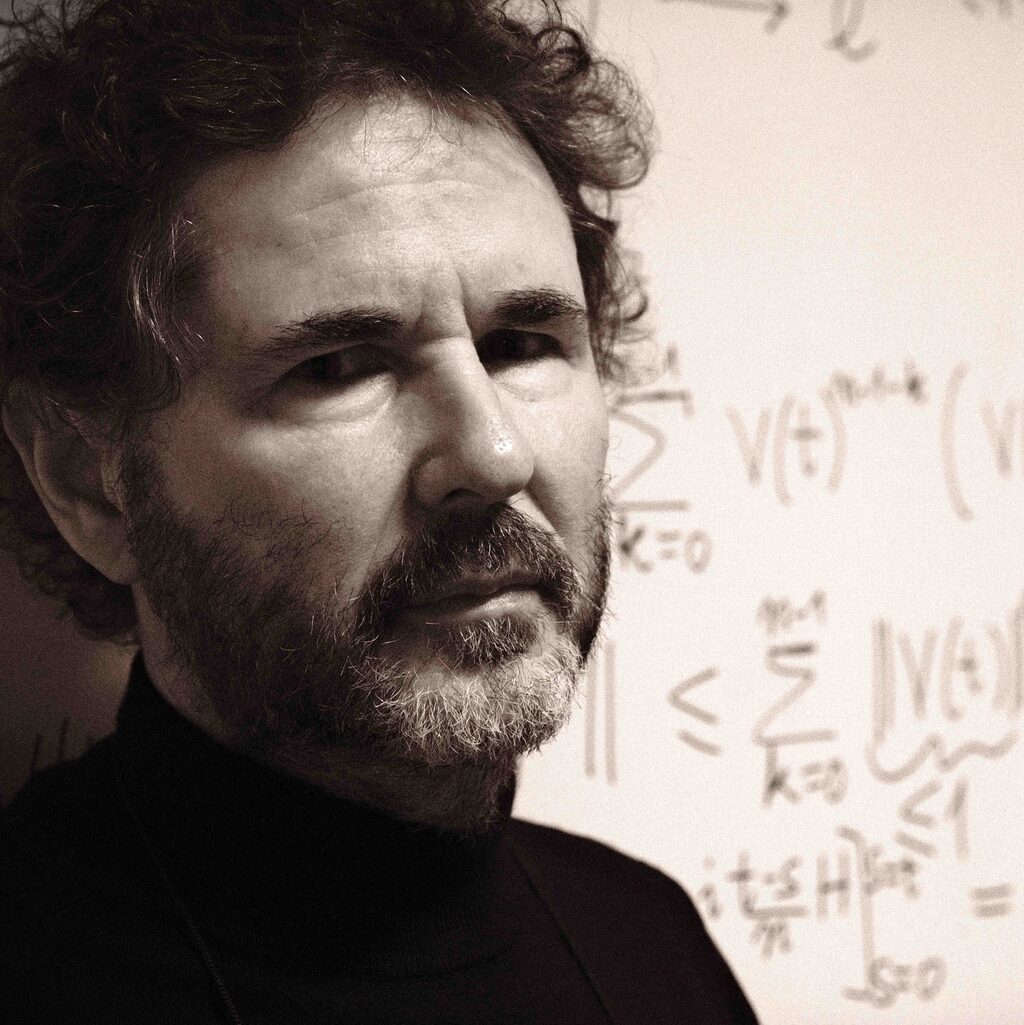
Paolo Facchi,
Full Professor of Theoretical Physics and Mathematical Methods, coordinator of “QUANTUM” research group at INFN Bari
“Quantum games“
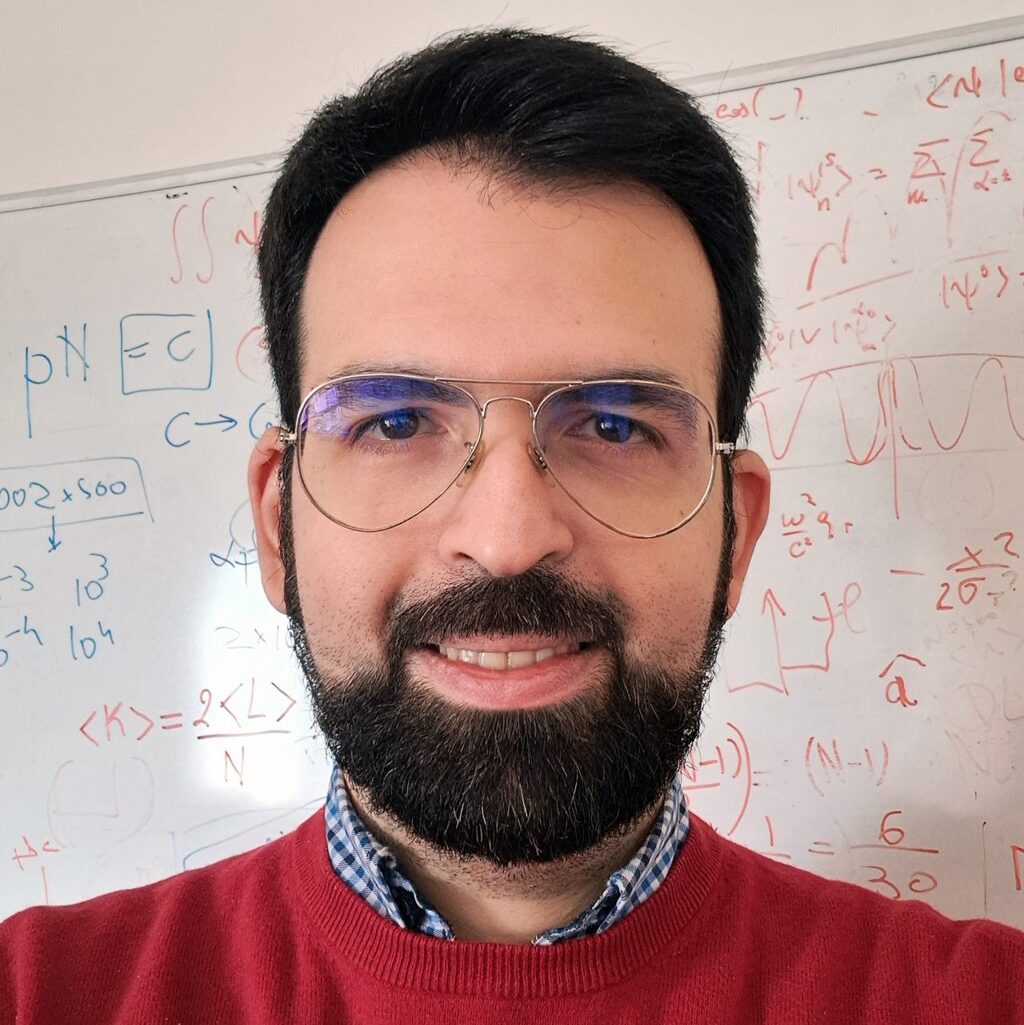
that are relevant for quantum technology implementations, and the possibility to enhance imaging by using quantum correlations. In teaching and dissemination, he is committed to providing an objective narrative of the “second quantum revolution”
Francesco Pepe,
Associate Professor of Theoretical Condensed Matter Physics
“From classical to quantum computation: expectations and reality“
From 2019 to 2023, he worked as a postdoctoral researcher at the Department of Physics and Astronomy “G. Galilei” of the University of Padua. Since 2023, he has been an Assistant Professor (RTDA) at the Department of Physics of Bari.
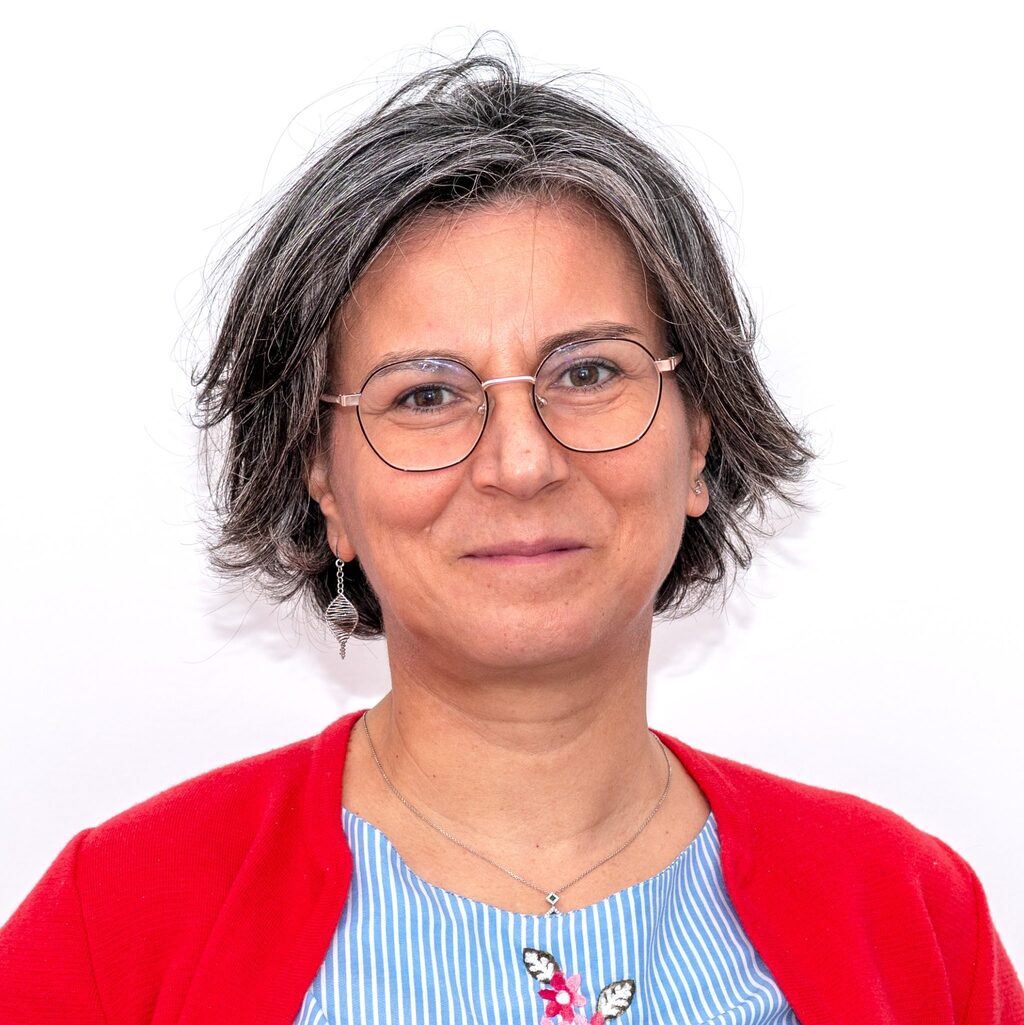
Giuseppe Magnifico,
Assistant professor of Quantum Physics
“Exploring Quantum Computing: From Complexity to Quantum Platforms“
Milena D’Angelo,
Associate Professor of Quantum Optics Physics
“Quantum imaging, from 3D to hyperspectral”
Vito Giovanni Lucivero,
Assistant Professor of Quantum Sensing and Matter Physics
Leader of the AQuTech group, CEO & Founder of QSENSATO
“Atomic Quantum Sensing and Metrology”
Marco Pappagallo,
Associate Professor of Particle Physics
“Unveiling the Universe: The Standard Model and Beyond“
One of the most captivating aspects of modern physics lies in the profound connection between the evolution and structure of the universe and processes occurring at the microscopic scale. Phenomena such as the disappearance of antimatter, as well as the nature of dark matter and dark energy, represent some of the major unresolved questions that may find explanations within the realm of elementary particle physics.
In this seminar the Standard Model, the theoretical framework that describes the fundamental interactions among elementary particles, will be introduced. Experiments conducted at the Large Hadron Collider (LHC) at CERN have significantly contributed to validate of the Standard Model, particularly with the discovery of the Higgs boson in 2012. Nonetheless, compelling experimental evidence suggests that the Standard Model may not constitute the ultimate theory of fundamental physics. The search for phenomena beyond the Standard Model remains a primary goal of future particle physics experiments at CERN. Such investigations may bring us closer to a deeper and more unified understanding of the fundamental laws governing our universe.
Elisabetta Bissaldi,
Associate Professor of General Physics
“Exploring the Cosmos: Satellites and Telescopes Reveal an Explosive Universe“
The Universe is shaped by extreme phenomena, capable of releasing enormous amounts of energy on different timescales. Understanding these explosive sources requires both the study of the physical mechanisms that power them and the development of instruments able to capture their high-energy signals.
In this talk, I will highlight the role of the Fermi Gamma-ray Space Telescope in unveiling the gamma-ray sky and present the future Cherenkov Telescope Array Observatory, which will provide an unprecedented view of the most energetic processes in the cosmos.
Sandra Lucente,
Professor of Mathematical Analysis and Science Communication, President of the Museum of Mathematics of the University of Bari
“Science and literature: Bohr and Heisenberg in Macondo”
If the history of quantum mechanics were a novel, it would be “One Hundred Years of Solitude” by Garcia Marquez. Not only does the time coincide with this centennial year, but the mathematical city this theory constructs is also similar to Macondo. A story in three different languages, with the collaboration of Nicola di Serio, hoping the audience doesn’t collapse!
