Conferences
Guest speakers
We are happy to host professors, academics and other prominent figures working with light and light-based technologies. Here you will find the profiles of some of them (constantly updated) and some informations about their conferences.
-
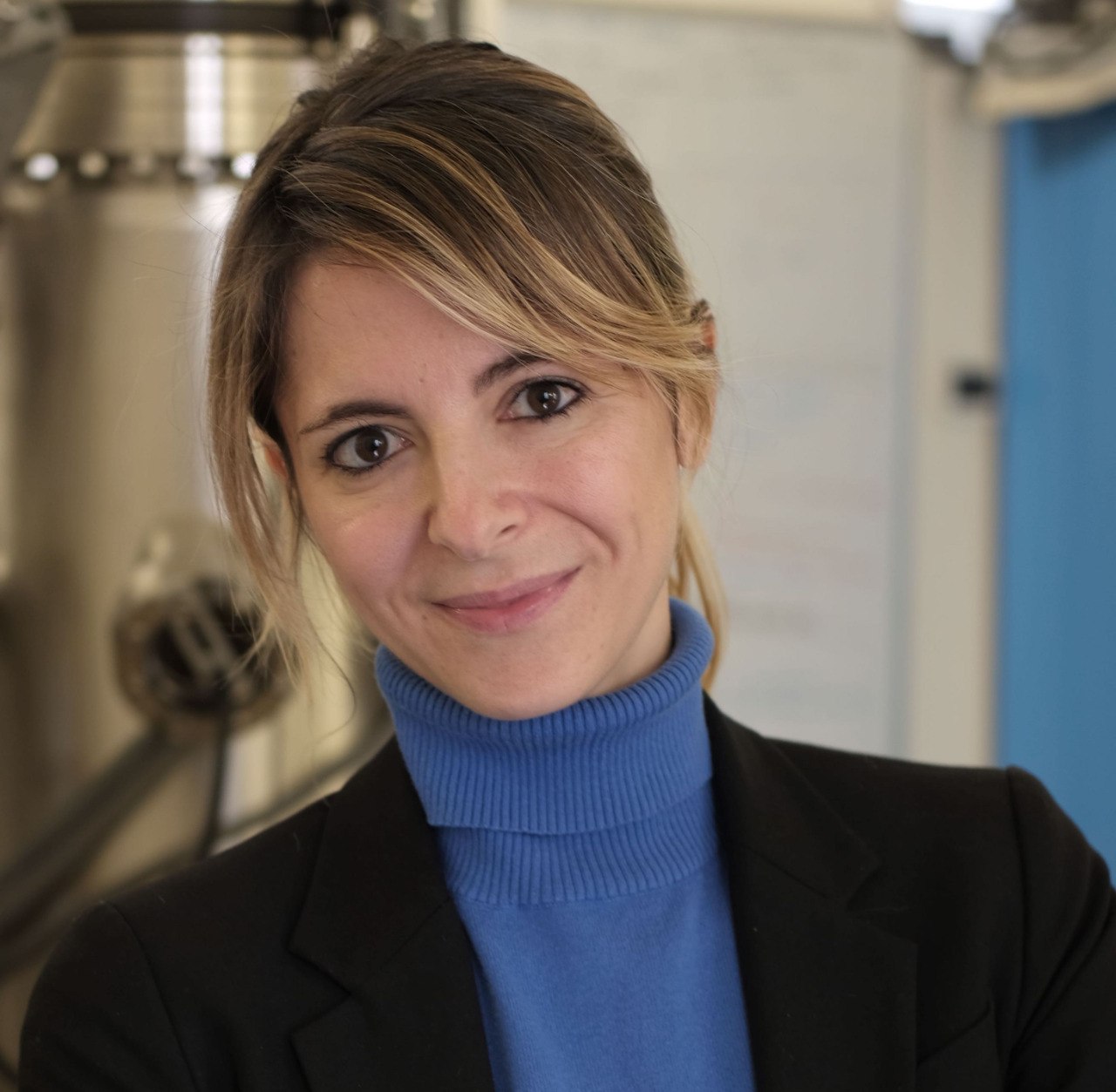 Camilla Coletti
Istituto Italiano di Tecnologia (IIT) and National Enterprise for nanoScience and nanoTechnology (NEST)
Camilla Coletti is a tenured Senior Scientist of the Istituto Italiano di Tecnologia (IIT) and principal investigator of the research line 2D Materials Engineering. She is the coordinator of the Center for Nanotechnology Innovation of Pisa and of the Graphene Labs. Her research is currently focused on:
- (i) synthesis and integration of scalable 2D materials for electronics, photonics and quantum technologies
- (ii) engineering van der Waals heterostructures.
Synthesising and Integrating Graphene for Photonic and Quantum Applications
Graphene is one of the most promising materials for future photonic and quantum technologies thanks to its exceptional electronic and optical properties, atomic thickness, and compatibility with heterogeneous integration on existing semiconductor platforms. To fully exploit its potential in scalable devices, however, the development of high-quality and wafer-scale synthesis and integration strategies is essential. In this talk, I will present recent advances in the chemical vapor deposition (CVD) growth of high-quality graphene and its transfer and integration onto photonic platforms [1,2]. I will discuss how scalable graphene integration enables the realization of high-performance photonic building blocks, including electro-optic devices operating at data rates exceeding 110 Gb/s [3–5], highlighting the potential of graphene for next-generation optical communication technologies. I will then show how the availability of scalable, high-mobility graphene also opens opportunities in the quantum domain. In particular, I will discuss the observation of quantum Hall effect signatures in large-area graphene platforms and the realization of twisted bilayer graphene and other twistronic systems obtained from CVD-grown materials [6–8]. These scalable moiré platforms provide access to correlated electronic phenomena and represent an important step toward the implementation of quantum functionalities in technologically relevant architectures. Overall, this work demonstrates how advances in graphene synthesis, transfer, and integration are enabling a bridge between scalable manufacturing, high-speed photonics, and emerging quantum materials platforms.
-
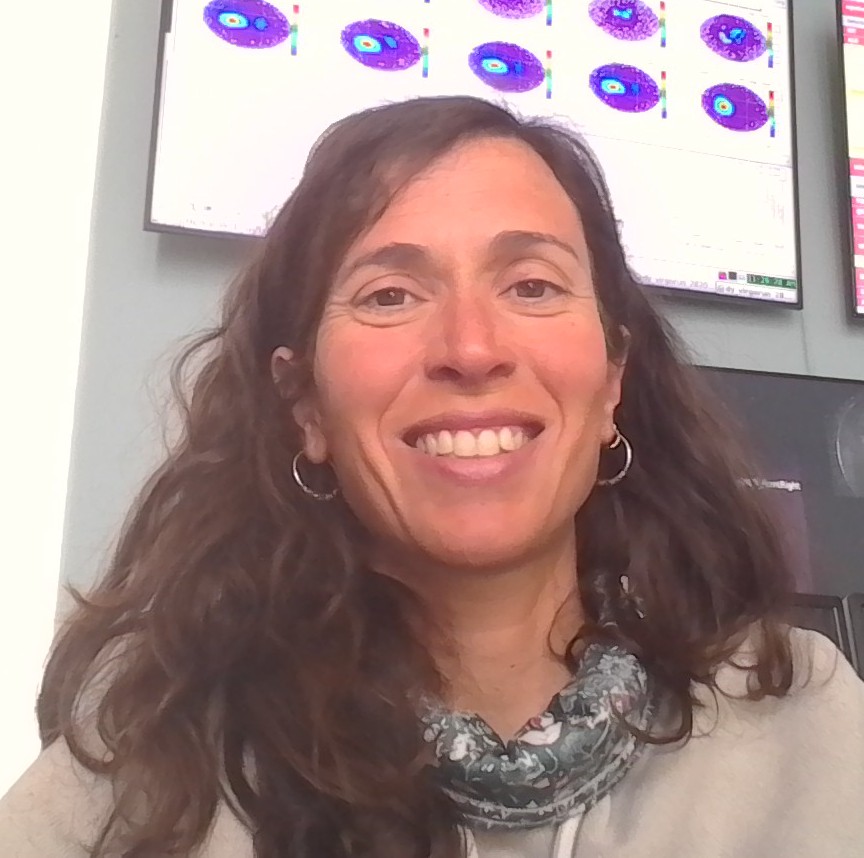 Camilla de Rossi
European Gravitational Observatory and Advanced Virgo Auxiliary Laser System
Camilla de Rossi is an experimental physicist with expertise in laser optics and gravitational wave detectors and technologist at the European Gravitational Observatory. As head of the Advanced Virgo Auxiliary Laser System, she contributes to the commissioning, control, and upgrade of the optical systems (INJ, PSL) aqnd the development of the AdV+ phase and the Einstein Telescope. She holds a PhD in Bose-Einstein condensates and has extensive experience in optical simulations, feedback systems, and the management of complex subsystems in large international collaborations.
-
 Giovanni Batignani
Sapienza University of Rome
Giovanni Batignani is an Associate Professor in the Department of Physics at Sapienza University of Rome. He earned his Ph.D. in Physical and Chemical Sciences from the University of L'Aquila in 2017, following his studies in Physics at the University of Siena (Bachelor's degree) and Sapienza University (Master's). As a member of the Femtoscopy group, his research focuses on Time-Resolved Vibrational Spectroscopy, aiming to unveil the ultrafast structural and dynamical properties of molecular systems and condensed matter. By integrating experimental and numerical approaches, Prof. Batignani develops advanced nonlinear Raman spectroscopy methods that exploit multiple light pulses to bypass the constraints imposed by the Fourier limit, enabling the investigation of matter on sub-picosecond timescales. His work has been recognized with the 2022 Raman Award for Best Junior Researcher and a 2024 ERC Starting Grant for his project on multidimensional Raman spectroscopy.
Capturing Ultrafast Dynamics in Biomolecules and Condensed Matter via Nonlinear Vibrational Spectroscopy
Tracking out-of-equilibrium dynamics at the atomic scale remains a critical challenge in both condensed matter and molecular physics, impacting a broad range of fields, such as photovoltaics, nanoscience, and ultrafast photonics. These processes typically unfold on sub-picosecond timescales, involving multiple coupled electronic and vibrational degrees of freedom. The natural hindrance in understanding their fundamental nature lies in the simultaneous demand for temporal and spectral resolutions, two key requirements that are mutually compromised due to the Fourier limit. In this presentation, we discuss how nonlinear Raman techniques represent a powerful tool to overcome these constraints, enabling vibrational spectroscopy on femtosecond realms. Using representative examples from both molecular and solid-state systems, we illustrate how these methods can provide comprehensive insights into ultrafast photophysics.
-
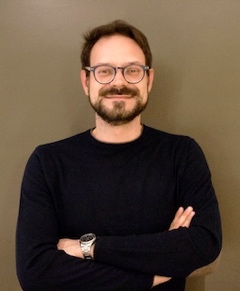 Giuseppe Emanuele Lio
University of Pisa
Dr. Giuseppe Emanuele Lio earned his Ph.D. in Physics, Chemistry, and Materials Science and Technology from the University of Calabria and the Nanotechnology Institute. He served as a research fellow at the National Institute of Optics, followed by a position as a research associate (RTDa) at the Department of Physics of the University of Florence and LENS. Subsequently, he was a Postdoctoral fellow at the Nanoscience Institute (CNR-Nano) in Pisa. Currently, he is Assistant Professor (RTT) at the Department of Physics of the University of Pisa. Throughout his career, his research in the photonics field has focused on metamaterials, thermo-plasmonics, metasurfaces for beam-steering, physical unclonable functions, and Passive Radiative Cooling.
Passive Radiative Cooling: Harnessing Light-Matter Interaction from Nano to Macro
How can an infinitely small structure—one-thousandth the width of a human hair and invisible to the naked eye—help us fight climate change? The answer lies in the fascinating world of light-matter interaction. When we engineer materials at the nano- or micro-scale, we can design them to behave in unexpected ways. In this talk, we will take a journey from the the infinitely small to macroscopic applications, focusing on a revolutionary technology: Passive Radiative Cooling (PRC). We will discover how special materials, thanks to their microscopic architecture, are able to reflect sunlight and, simultaneously, radiate their own heat directly into deep space, bypassing the Earth atmosphere. The result? Surfaces that cool themselves down without consuming a single watt of electricity. A perfect blend of fundamental physics and sustainable innovation for our future.
-
 Doctor Alice Boschetti
University of Florence, European Laboratory for Non-Linear Spectroscopy (LENS) and National Metrology Institute of Italy (INRiM)
Alice Boschetti earned her PhD at the European Laboratory of Non-Linear Spectroscopy, where she developed an innovative method for spectral super-resolution spectroscopy using a random laser. Presently, she is a researcher at the National Metrology Institute of Italy, focusing on the development of unconventional light sources based on light-harvesting materials, as well as complex porous and scattering materials for photonics and sustainability. She participates in the APACE project as the Scientific Responsible for the INRIM unit, leading the development of the bioinspired micro-solar laser device. Together with the INRIM team, Alice will develop multilayer optical micro-cavities, leveraging advanced optical and morphological characterization techniques such as scanning electron microscopy and optical profilometry, as well as state-of-the-art fabrication methods like direct laser writing.
Soft photonics with polymeric platforms: from spectral encoding to microlasers
Compact photonic technologies increasingly rely on the combination of solution-processable materials, simple architectures, and computational methods. Within this framework, reconstructive spectroscopy and organic strong-coupling platforms offer two complementary directions for soft photonics. In reconstructive spectroscopy, spectral information is retrieved from a limited number of measurements, reducing the need for conventional dispersive components. Inkjet-printed arrays of broadband optical filters have been shown to support accurate spectral reconstruction over a wide bandwidth when combined with suitable regularization and filter-selection procedures, enabling compact and low-cost spectrometers. In parallel, supramolecular light-harvesting complexes embedded in metal-based organic microcavities enable room-temperature exciton-polariton formation with large Rabi splittings in low-Q systems. These structures represent scalable and loss-tolerant platforms for low-threshold microlasers and related polaritonic devices. Together, these results show how tailored materials, scalable fabrication, and computational design can be combined to develop miniaturized photonic platforms for spectroscopy, sensing, and light-matter control.
-
 Giovanni Modugno
University of Florence and European Laboratory for Non-Linear Spectroscopy (LENS)
Giovanni Modugno is a Full Professor of Condensed Matter Physics at the University of Florence and a leading experimental physicist specializing in ultracold quantum gases. His groundbreaking research includes the first Bose-Einstein condensation of potassium, the creation of Bose-Fermi mixtures, and the first-ever observation of the elusive 'supersolid' phase in magnetic atoms. His pioneering work in these fields earned him a prestigious ERC Starting Grant in 2007 and led to his coordination of major international projects, such as the H2020 FET 'QUIC' quantum simulation project. With over 80 highly cited publications in top-tier journals like Nature and Science, his scientific excellence is further recognized by his 2014 APS Outstanding Referee award and his membership in the Academia Europaea.
Discovering the supersolid phase of matter with quantum gases
Supersolids are a fundamental quantum phase of matter combining properties of crystals and of superfluids. A supersolid phase was recently discovered in Bose-Einstein condensates of strongly magnetic atoms. I will discuss how a supersolid can behave as a self-induced Josephson junction array, and how it is possible to deduce from the Josephson dynamics the superfluid fraction, which is the universal property quantifying the deviation of supersolids from both crystals and superfluids.
Students speakers
During LOT26, you will have the opportunity to learn about the academic experiences of other physics students. They will also participate as speakers in the conferences and events organized during the program.
-
 Dorotea Nardini
European Laboratory for Non-Linear Spectroscopy (LENS)
Dorotea Nardini holds an MSc degree in Physics from the University of Florence and is a PhD student in Atomic and Molecular Photonics at the European Laboratory for Non-Linear Spectroscopy (LENS). Her research focuses on the development of a hyperspectral imaging (HSI) system for the identification and grading of brain tumors. Her work also involves the volumetric reconstruction of the biochemical microenvironment in brain cancer samples using light-sheet fluorescence microscopy (LSFM). This dual approach aims to correlate superficial spectral information with the underlying structural and molecular features of the tissue.
-
 Assia Mariani
University of Pisa
Assia Mariani received her BS and MS in Physics from Sapienza University of Rome. She carried out her master’s thesis, titled Unravelling excited-state molecular vibrations by chirped Raman spectroscopy, under the supervision of Prof. Tullio Scopigno and Prof. Giovanni Batignani in the Femtoscopy group, where she later worked as a junior research fellow. She is currently a fixed-term researcher at the University of Pisa, where she focuses on the development and characterization of biodegradable polymer materials.
Time-Domain Raman Spectroscopy with Chirped Pulses
Pump probe spectroscopy refers to the ensemble of experimental techniques which study the out of equilibrium temporal evolution of a sample upon a photoexcitation. When combined with vibrational spectroscopy, it enables the monitoring of molecular relaxation dynamics. Among these techniques, impulsive stimulated Raman scattering (ISRS) uses a two-pulse scheme to stimulate and read out vibrational signatures directly in time domain. Critically, it requires a full scan of the time delay between the two pulses along the entire dephasing time, which implies long acquisition times as well as extended exposure of the sample to multiple ultrashort pulses. To overcome these limitations, we introduce a large temporal delay between the different spectral components of the probe pulse, i.e. a chirp, for recording Raman vibrations without the need of scanning over the pump-probe pulse delay.
-
 Nessim Louafi
Friedrich Miescher Institute for Biomedical Research (FMI), Basel, Switzerland
Staying in Contact: How Microscopy Reveals the Hidden Dance of DNA
DNA is a long polymer chain packaged into the cell nucleus with a constrained geometry: the small size of the nucleus relative to the length of the DNA chain creates a very dense environment. The precise configuration of the DNA chain plays an important role into the activation of genes, which in turn provides the instructions for assembling proteins—the primary drivers of cellular activity. However, how the dynamical change in conformation relates to the precise activation in space and time of every gene is an open question. To tackle this problem, we employed high-resolution live-cell microscopy, enabling us to directly visualize and track the movement of DNA inside living cells in real time. We observed rare but long-lasting physical proximity events between DNA segments. These events are not random collisions due to thermal fluctuation of the DNA fiber; instead, they are driven by cohesin, a molecular complex that pulls DNA strands together into specific loops. Our data shows that only these sustained encounters—rather than brief, random meetings—are what successfully activate genes. This offers a new, unified view of how the physical dynamics of chromosomes control life at the cellular level.
Science Café
Furthermore, during LoT26, you will have the opportunity to attend the 'Caffè Scientifico - The Role of Light in Physics Research', organized by the Department of Physics of the University of Pisa. Over a warm cup of coffee, you will be able to enjoy short outreach talks in which students from the department will share how light and optics play a role in their research
-
Krishna Nand Trivedi
From Laser Cooling to Precision Sensing with Cold Atoms Using Light
Krishna Nand Trivedi is a third-year PhD student in the field of Atomic Physics. He completed his bachelor’s and master’s studies in Physics in India before moving to Italy to pursue his PhD in the lab of Dr. Morsch. His research focuses on study of correlated dissipation in two-dimensional arrays of atoms trapped in optical tweezers. In my research, light is the main tool used to control and study atoms with very high precision. Using laser cooling techniques, we reduce the temperature of atoms from room temperature to nearly 150μK. Light is also used to probe the atomic gas and measure important properties such as its temperature. By combining carefully controlled laser fields with cold atoms, we can create highly sensitive platforms for precision measurements. These atom–light systems enable the detection of electric and magnetic fields with remarkable accuracy, opening the way to advanced sensing applications.
-
Davide Baiocco
Guided systems for compact solid state laser sources
Davide Baiocco received his Bachelor's degree in Physics in 2020, his Master's degree in Physics in 2022, and his Ph.D. in Physics in 2026 at the University of Pisa. In his Master's and Ph.D. theses, he developed waveguide lasers based on rare-earth doped materials. He is currently a post-doc researcher at the University of Pisa, where he develops guided solid-state laser sources operating in the visible and near-infrared spectral bands. He is also working on microresonators for the mid-infrared and THz frequency regions. His research activity involves the fabrication of compact solid-state laser sources based on rare-earth-doped fluoride crystals.
-
Gaia Di Carlo
Quantum cascade lasers in the THz spectral region
Gaia Di Carlo graduated in Condensed Matter Physics at the University of Pisa. Her thesis work involved quantum cascade lasers, both as sources and detectors, to probe the optical response of two-dimensional materials.
-
Chiara Brugnoni
Manipulating light with micrometric trampolines
Chiara Brugnoni graduated in Condensed Matter Physics at the University of Pisa. I will talk about how it is possible to control the polarization of light by exploiting the optomechanical interaction between particular photonic states, known as BICs, and the vibrations of a trampoline-like suspended structure. In particular, we will understand how to excite the vibrational mode of the trampoline in order to take advantage of the ability of BICs to rotate the polarization of light.
-
Pietro Lenzi
Light and nanocrystals to measure temperature on the nanometer scale
Pietro Lenzi got his bachelor degree in physics and my master degree in materials and nanotechnology from the University of Pisa. His research interests are nanotechnology and microscopy applied to life sciences. I’ll introduce the use of rare-earth-ion-doped nanocrystals as nanoscale temperature sensors for applications in fluorescence microscopy. The physical mechanisms and the main experimental characterization techniques will be discussed.
-
Piergiorgio Laterza
Role of light in spatial maps of ion velocity
Piergiorgio Laterza is a Master's student in Physics at the University of Pisa. His curriculum in Condensed Matter Physics has focused on optics, spectroscopy, and light-matter interactions. His project focuses on the development of a system based on Laser Induced Fluorescence (LIF) in support of the characterization of electric space propulsion systems. This work investigates the optical properties of ionized gases within the thrusters in order to obtain detailed information about the operating conditions of the system. Piergiorgio have found his dimension in the laboratory, where new challenges are faced and complex problems are solved every day. Experiments represent for him an opportunity to verify the theories learned during lectures and to develop solutions to real problems. On a personal level, he is deeply fascinated by the impact of optical technologies on various aspects of everyday life, and by how they can be used to solve complex problems with minimal invasiveness.
-
Tommaso Risso
Are cells playing tug-of-war?
Tommaso Risso obtained a master's degree in physics from the University of Pisa. His research interests lie in cellular biophysics, particularly in the development of experiemntal techniques based on advanced fluorescence microscopy to probe the cellular cytoskeleton and its mechanical properties.
-
Martina Cucinotta
Light in ATLAS hadron calorimeters
Martina Cucinotta is a PhD student in Particle Physics at the University of Siena working on the ATLAS experiment at CERN. Her research involves both Higgs boson data analysis and work on the ATLAS hadronic calorimeter, where tiny flashes of light are used to detect particles produced in high-energy collisions. In this short talk, will be discussed how light helps us make the invisible world of particles visible.